

Prize Pool:¥500,000
299

Teams
658

Registrations
My Team
Team Leader
To be established

In review

Established
Small-Molecule Track Submission deadline: 18:00, 2026-08-09 (UTC+8)
Antibody Track Submission deadline: 18:00, 2026-07-26 (UTC+8)
Upload Small-Molecule Track Submission
To be uploaded
Uploaded
Deadline: 18:00, 2026-08-09 (UTC+8)
Upload Antibody Track Submission
To be uploaded
Uploaded
Deadline of Round 1: 18:00, 2026-07-26 (UTC+8)
Deadline of Round 2: 18:00, 2026-10-14 (UTC+8)
Event Introduction
Academic Committee
Organizers
Awards and Benefits
Small-Molecule Track: Task Description and Schedule
Antibody Track: Task Description and Schedule
Challenge Overview
I. Background
To accelerate the innovative development of computational biology in Shanghai and promote the deep integration of artificial intelligence technologies with the biopharmaceutical industry, the Shanghai Center of Biomedicine Development will host the 2026 Shanghai International Computational Biology Innovation Challenge. The 2026 Challenge is centered on real-world R&D tasks and establishes a closed-loop mechanism of "AI design - experimental validation - feedback-based optimization." It features two tracks, Small-Molecule Design and Antibody Design, and will systematically evaluate and advance AI-based molecular design methods for important disease targets, with the aim of building the Challenge into an influential international competition in AI-enabled life sciences.
II. Objectives
1. Bring together global talent in the field, strengthen interdisciplinary convergence, exchange views on innovation frontiers, identify scenario needs, and stimulate innovative ideas, so as to support the integrated development of artificial intelligence and biomedicine and further enhance Shanghai's overall competitive advantage in computational biology.
2. Build a high-level international competition IP, develop a distinctive brand, broaden channels for external exchange, and enhance Shanghai's voice and influence in global computational biology.
3. Foster a sound environment for innovation translation, focus on technology R&D and scenario implementation, continue to deepen the mechanisms of evaluation through competition and talent selection through competition, integrate high-quality resources from multiple parties, and build an efficient and coordinated industrial resource network.
4. Encourage new computing paradigms and advanced computing power to empower drug discovery, explore new computing paradigms such as AI, and encourage the integrated use of heterogeneous computing hardware such as GPUs and MaPUs.
III. Eligibility and Participation
1. The Challenge is open to participants worldwide. There are no nationality restrictions. Universities, research institutions, enterprises, public institutions, and individuals may register through the official Challenge website.
2. All Team Members must complete registration and team formation on the Challenge Platform. Each Team Member must provide the required personal information during registration and complete real-name verification before participating.
3. Team formation: Each Participant may create or join only one Participating Team. As a general rule, team changes are not allowed. Each Participating Team may have 1 to 5 members. The Team Leader creates the team on the “My Team” page of the Challenge Platform. The team name is determined by the Team Leader. Other Team Members may search for the team name and join the team. Team formation must be completed before the registration deadline. The same Participating Team may choose to enter the Small-Molecule Design Track, the Antibody Design Track, or both tracks.
Notes
1. Individuals involved in task development or Challenge organization may not participate.
2. A participant account may be used only by the registered Participant. It may not be transferred, rented, lent, sold, disclosed, or otherwise provided to any third party.
3. Participants are responsible for ensuring the authenticity and validity of their account information. Participants shall bear the consequences arising from invalid or incorrect information.
4. Participants are responsible for the use of their accounts. If any security issue occurs, including account loss, theft, or unauthorized use, the Organizer must be notified immediately.
IV. Task Introduction
This year's tasks include two tracks, Small-Molecule and Antibody, focusing on target directions with translational potential and innovation value. HSV DNA polymerase (HSV Pol) has been selected as the task for the Small-Molecule Track, and the immune checkpoint molecule PVRIG (CD112 receptor) has been selected as the task for the Antibody Track.
Herpes simplex virus (HSV) infection is widespread and can cause herpes labialis, genital herpes, keratitis, encephalitis, and other diseases. As a core functional protein in viral replication, HSV Pol is subject to the continual emergence of drug-resistant mutations, which seriously affects clinical treatment outcomes. Because drug-resistant mutations can affect polymerase conformational dynamics and drug sensitivity through multiple routes, this task focuses on the joint inhibition design of the wild type and representative drug-resistant mutants. Participating Teams are required to consider complex factors such as protein sequence, multi-conformation structures, and multiple mutants when conducting computational design and optimization. The task involves substantial uncertainty and computational challenge, and can well demonstrate the typical application of AI and computational biology methods in modeling complex biological systems and discovering anti-resistance drugs.
PVRIG (CD112R), after binding to its ligand PVRL2, can suppress T-cell and NK-cell function and promote tumor immune escape. It is considered a next-generation immunotherapy target with significant potential. Because different antibodies can achieve functional activity by recognizing different epitopes and adopting different blocking mechanisms, this task focuses on antibody design that blocks PVRIG-PVRL2 interaction. Participating Teams are required to consider multi-task objectives such as affinity, specificity, and developability when conducting computational design and optimization. The task has high computational complexity and can well demonstrate typical applications of AI and computational biology in antibody structure generation, epitope recognition, and rational optimization.
V. Challenge Communication
Questions about the 2026 Challenge may be submitted through the following official channels:
Option 1: Add the official WeChat assistant
All Team Leaders are strongly encouraged to add the official WeChat assistant. Scan the QR code and add the “Challenge Assistant” WeChat account. After adding the account, send the message “Shanghai Computational Biology Challenge” to make an inquiry.
Option 2: Send an email
Email: SICBC@phaimus.com
Please include “Challenge Inquiry” in the subject line to help us identify your message.
Important Notes
1. Consultation hours are 9:30-18:00 on working days, Monday to Friday, Beijing Time (UTC+8). Inquiries received during this period will be processed and answered as soon as possible. Inquiries received outside working hours, including holidays, or before 9:30 or after 18:00 on working days, will be processed on the next working day.
2. To improve communication efficiency and ensure accurate information, please clearly provide your name, team name, contact information, and other registration information when making an inquiry. This information will be used only by the Organizing Committee for internal identity verification and administrative handling.
3. The WeChat account and email address listed above are the official communication channels for the 2026 Challenge. They are operated and managed by the Organizing Committee. Please verify the official channels and beware of impersonation.
VI. Terminology
1. Small-Molecule Track Terminology
Submitted molecule: The submission made by a Participating Team is a submitted molecule, including a small-molecule compound selected and recommended from the designated compound library, or a newly designed small-molecule compound for which the Participating Team provides a physical sample as required. To ensure consistent wording, “submitted molecule” is used at the stages of submission, ranking, duplicate check, replacement, and submission review.
Candidate small molecule: After submission review, duplicate check, replacement where applicable, and confirmation of purchasability or synthesizability, small-molecule compounds that enter the purchase, custom synthesis, sample delivery, or wet-lab validation process are collectively referred to as candidate small molecules. To ensure consistent wording, “candidate small molecule” is used at the stages of purchase, custom synthesis, sample delivery, TSA-based initial screening, IC50 testing, re-evaluation, and wet-lab scoring.
Small-molecule compound: “Small-molecule compound” is used when referring generally to the task object, the compound library, or small-molecule drug discovery.
2. Antibody Track Terminology
Candidate antibody sequence: An antibody amino acid sequence submitted by a Participating Team during registration submission or the Iterative Submission Stage. To ensure consistent wording, “candidate antibody sequence” is used in submission, registration review, iterative submission review, and related steps.
Candidate antibody molecule: Antibody samples that pass review and are expressed, purified, and used for in vitro testing by the Organizer based on candidate antibody sequences are collectively referred to as candidate antibody molecules. To ensure consistent wording, “candidate antibody molecule” is used in expression, purification, in vitro testing, experimental validation, scoring, advancement, and award ranking.
Candidate antibody: When no distinction is made between the submitted sequence format and the experimental sample form, “candidate antibody” is used as a general term for submissions related to the Antibody Track.
VII. Other Notes
If any of the following circumstances occurs, it will be treated as a violation. The Organizing Committee may disqualify the relevant Participating Team:
1. The Participant or Participating Team provides false registration information or fails to meet the registration or team formation requirements of the Challenge.
2. The submission is suspected of plagiarism or infringement of another party’s intellectual property rights.
3. During the Challenge, the Participating Team or its submission is found, or is confirmed after a report, to involve other illegal or non-compliant conduct.
4. Challenge data: The Organizing Committee authorizes Participants and Participating Teams to use the data provided for this Challenge only for model training within the scope of participation in the 2026 Challenge. Without written consent from the Organizing Committee, the model training data provided for this Challenge may not be used for any commercial purpose.
5. Matters related to intellectual property shall be governed by the Intellectual Property Statement published on the official Challenge website.
The Organizing Committee reserves the final right of interpretation of the rules for this Challenge.
| Documents | Action |
|---|---|
| 附件12.知识产权说明 (Appendix_12_Intellectual_Property_Statement).zip |  |
Academic Committee of the Competition
${ expertList[0].enName }
${ item.enName }
Organizers
1. Guidance:
Science and Technology Commission of Shanghai Municipality
2. Host:
Shanghai Center of Biomedicine Development
3. Strategic Partners:
Bank of Shanghai
Shanghai Innogen Pharmaceutical Technology Co., Ltd.
4. Supporting Organizations
School of Medicine, Shanghai University
Shanghai Institute of Infectious Disease and Biosecurity
Novoprotein
Shanghai Engineering Research Center for Synthetic Immunology
5. Co-organizers
State Key Laboratory of Drug Research
College of Biotechnology, Fudan University
Alliance of Open Life Science
Shanghai Zhiyaobang Technology Development Co., Ltd
Clickmab Biotechnology (Suzhou) Co., Ltd.
Shanghai Titan Scientific Co., Ltd.
Shanghai SSCI Leading Private Equity Fund Management Co., Ltd.
Guotai Haitong Securities Co., Ltd.
E Fund Private Equity Management Co., Ltd.
6. Organizers:
Shanghai Biopharma Service Company Limited
Shanghai Technological Service Platform for Biomedicine Industry
Awards and Benefits
I. Awards for the Small-Molecule Track
1. First Prize (1 team): RMB 100,000 and an award certificate.
2. Second Prize (2 teams): RMB 30,000 per team and an award certificate.
3. Third Prize (2 teams): RMB 20,000 per team and an award certificate.
4. Excellence Award (5 teams): RMB 10,000 per team and an award certificate.
II. Awards for the Antibody Track
1. First Prize (1 team): RMB 100,000 and an award certificate.
2. Second Prize (2 teams): RMB 30,000 per team and an award certificate.
3. Third Prize (2 teams): RMB 20,000 per team and an award certificate.
4. Excellence Award (5 teams): RMB 10,000 per team and an award certificate.
III. Service Policies
1. Priority recommendation. Teams winning First, Second, or Third Prize will receive priority support from relevant Shanghai science and technology programs.
2. Scenario-based collaboration. The Challenge will work with leading biomedical companies, key universities, and research institutions in Shanghai to recommend qualified award-winning teams for access to real-world experimental validation platforms and joint R&D opportunities. This will support the validation and application of algorithms and models in real drug discovery pipelines.
3. Translational support. Award-winning projects may receive one-stop support, including patent application assistance, entrepreneurship guidance, and investment and financing connections, to support project translation and implementation.
4. Academic publication. The publication of Challenge results and related analyses in peer-reviewed academic journals will be supported to increase the academic impact of the outcomes.
5. Talent development. The Challenge will work with key biomedical companies, innovative R&D institutions, AI drug discovery companies, and investment funds in Shanghai to establish a “talent recommendation whitelist” mechanism. Core Team Members of award-winning teams may receive priority access to targeted internships, priority recruitment opportunities, and other benefits. This will help create a direct pathway from the Challenge to career development.
IV. Additional Notes
1. All prize money is pre-tax. The Organizer will withhold and remit applicable taxes in accordance with relevant tax policies before payment to the Participating Team.
2. If multiple candidate small molecules or candidate antibody molecules from the same Participating Team enter the award ranking within the same track, only the award corresponding to the team’s highest-ranked representative molecule will be granted. Different awards may not be granted to the same team. For example, if a Participating Team receives the First Prize, its other recommended candidate small molecules or candidate antibody molecules may not also receive an Excellence Award.
3. Due to potential uncontrollable factors during the Challenge, including candidate small-molecule activity, procurement timelines, candidate antibody expression and purification, and experimental scheduling, the Organizer may adjust the Challenge rules during the Challenge based on actual circumstances. The Organizer reserves the right to make final interpretations and decisions.
Small-Molecule Track: Task Description and Schedule
I. Task Overview
In 2024, building on Shanghai's research strengths in biomedicine and computational biology, Professor Yuemin Bian of Shanghai University, as a co-first author, collaborated with a team at Harvard Medical School to publish the paper "Viral DNA polymerase structures reveal mechanisms of antiviral drug resistance" in Cell. The study used multi-conformation structural analysis to reveal the structural basis and drug-resistance mechanisms of herpes simplex virus (HSV) DNA polymerase (HSV Pol) in viral replication and antiviral drug action. It clarified the link between conformational dynamics and drug selectivity. These findings provide an important theoretical basis for developing new anti-HSV drugs that can address resistance.
HSV DNA polymerase belongs to the virally encoded family B DNA polymerases. It is a core functional protein in the HSV replication complex. Together with the processivity factor UL42, HSV Pol forms a heterodimeric complex that participates in viral DNA replication. HSV Pol is responsible for nucleotide polymerization and 3'-5' exonuclease proofreading. UL42 enhances DNA binding and substantially improves replication processivity. HSV infection is widespread and can cause herpes labialis, genital herpes, keratitis, and encephalitis. Viral replication depends heavily on HSV Pol activity, making this target central to antiviral therapy. Current clinical drugs, such as acyclovir and foscarnet, act by inhibiting HSV Pol. However, drug-resistant mutations can reduce drug sensitivity by altering polymerase conformational dynamics, which may lead to treatment failure.
Although HSV Pol is a well-established antiviral target, high-affinity and highly selective inhibitors designed against its conformational dynamics remain limited. Complex structural dynamics, less obvious resistance mechanisms, and the limited efficiency of traditional screening approaches are major bottlenecks for drug discovery against this target.
In this Challenge, the Small-Molecule Track focuses on HSV Pol. Based on the protein sequence and multi-conformation structural information of HSV Pol, Participating Teams are expected to use artificial intelligence (AI) and computational biology methods to screen potential non-nucleoside small-molecule compounds that inhibit the wild-type (WT) enzyme and three representative drug-resistant mutants: W781V, N815S, and Y941H. The Organizer will conduct wet-lab validation of candidate small molecules to evaluate their activity. The Track aims to accelerate the discovery and translational development of new anti-HSV drug candidates and to promote the use of AI and computational biology in antiviral drug discovery.
II. Task Objectives
Using the protein sequence and multi-conformation structural information of HSV Pol, Participating Teams should develop or optimize AI and computational biology methods, and combine them with wet-lab validation, to identify non-nucleoside HSV Pol inhibitors with strong overall activity against WT HSV Pol and the representative drug-resistant mutants W781V, N815S, and Y941H. The goal is to support the translational application of AI and computational biology in innovative drug discovery.
III. Small-Molecule Compound Library
Designated Small-Molecule Compound Library: The designated library contains approximately 10 million small-molecule compounds and associated information. A download link will be provided for the compound library: Compound Data List 2026.zip. The library covers fragment libraries, drug-like compound libraries, bioactivity-annotated compound libraries, natural product libraries, as well as preferred commercial compound libraries and expanded compound libraries.
Among them, approximately 20,000 small-molecule compounds are bioactivity-annotated compounds. They constitute a pan-bioactivity compound collection across multiple targets and multiple types of bioactivity, and may be used by Teams as optional auxiliary data for model training, method validation, similarity analysis, and structural reference. The provision of these compounds does not indicate that they have known activity against the target of this Task, HSV Pol, nor do they constitute standard answers for the Competition. The activity evaluation of the final candidate small molecules shall be based on the wet-lab validation results uniformly organized by the Organizer.
Library construction standards: 1. deduplication based on structural standardization and hash indexing; 2. removal of unrecognizable small-molecule compounds using the RDKit algorithm; 3. retention of small molecules with molecular weights ranging from 300 to 600 Da; and 4. completion of software compatibility testing.
The example below illustrates the data fields included in the compound library file.
Field | Example Value |
SMILES | CCn1cc(c(C)n1)S(=O)(=O)N1CCN(CC(=O)NC2CCCCC2)CC1 |
MolWt | 397.54 |
HBD | 1 |
HBA | 9 |
LogP | 1.142 |
RotB | 7 |
TPSA | 74.541 |
Fsp3 | 0.778 |
InChI | 1S/C18H31N5O3S/c1-3-22-13-17(15(2)20-22)27(25,26)23-11-9-21(10-12-23)14-18(24)19-16-7-5-4-6-8-16/h13,16H,3-12,14H2,1-2H3,(H,19,24) |
InChIKey | GOJHKTMJKLJMBO-UHFFFAOYSA-N |
IV. Schedule
The Small-Molecule Track includes four stages: Registration Stage, Preliminary Round, Semifinal Round, and Final Round.
1. Registration Stage (from the Challenge launch date to 18:00:00 Beijing Time (UTC+8) on August 9, 2026)
Participants may register individually or as a team. All participants must create or join a Participating Team. Participating Teams must submit the required materials within the stated period. The Organizer will conduct a Preliminary Round shortlisting review, and the list of shortlisted teams and candidate small molecules entering Initial Screening in the Preliminary Round will be announced by August 16, 2026. Required submissions are listed below.
Schedule Stage | Step | Time | Submission Requirements |
Registration Stage | Submit Proposed Approach Abstract | From launch to 18:00 on August 9, 2026 | Participating Teams must submit a Proposed Approach Abstract. The template is provided in Attachment_1_Proposed_Approach_Abstract_Template.docx. The Organizer will select up to 100 teams to enter the Challenge based on the team's research foundation, understanding of the task, feasibility, and innovativeness. The abstract scoring criteria are detailed in Attachment_2_Abstract_Scoring_Criteria.pdf. |
Molecule Submission | Participating Teams must use self-developed AI computational models or models adapted from open-source methods. Each team must submit a ranked list of 100 submitted molecules, ordered from high to low by predicted score. The submission template is provided in Attachment_3_Small-Molecule_Track_Preliminary_Round_Submission_Template.docx. | ||
Preliminary Round Shortlisting | Based on the priority order of submitted molecules, the Organizer will, in principle, select up to 10 submitted molecules from each team as candidate small molecules to enter Initial Screening in the Preliminary Round. |
2. Preliminary Round (mid-August to mid-November 2026)
During the Preliminary Round, the Organizer will conduct wet-lab validation and evaluation of candidate small molecules against HSV Pol. The testing procedure and scoring rules for the Small-Molecule Track are detailed in Attachment_4_Small-Molecule_Track_Experimental_Testing_Procedure_and_Scoring_Rules.pdf. The list of teams advancing to the Semifinal Round will be announced in mid-November 2026. The Preliminary Round includes three steps.
Schedule Stage | Step | Time | Submission Requirements |
Preliminary Round | Initial Screening | Mid-August to mid-November 2026 | Candidate small molecules that pass the shortlisting review will undergo high-throughput Thermal Shift Assay (TSA)-based initial screening. The assay measures changes in thermal stability after candidate small molecules bind to HSV Pol WT protein. Candidate small molecules will be ranked from high to low by ΔTm. The top 100 candidate small molecules will enter Initial Evaluation. |
Initial Evaluation | Candidate small molecules entering Initial Evaluation will undergo multi-concentration IC50 validation using an in vitro DNA polymerase activity assay system for HSV Pol WT. | ||
Results Feedback and Advancement | Candidate small molecules will be ranked from low to high by IC50. For each Participating Team, the candidate small molecule with the best performance will be used as its representative molecule. Team ranking will be generated based on representative molecule scores. The top 10 Participating Teams will advance to the Semifinal Round. |
3. Semifinal Round (mid-November to late November 2026)
During the Semifinal Round, the Organizer will conduct further wet-lab validation and evaluation of candidate small molecules against HSV Pol. The list of teams advancing to the Final Round will be announced by November 30, 2026.
Schedule Stage | Step | Time | Submission Requirements |
Semifinal Round | Re-evaluation | Mid-November to late November 2026 | Candidate small molecules will undergo multi-concentration IC50 evaluation against three drug-resistant mutants: W781V, N815S, and Y941H. |
Results Feedback and Advancement | The re-evaluation total score will be calculated based on WT inhibitory activity, inhibitory activity against the three mutants, and the WT interaction score. It will serve as an important basis for advancement and awards. The Organizer will announce five Participating Teams advancing to the Final Round. | ||
Model and Source Code Submission | Participating Teams that enter the Semifinal Round must submit source code that can reproduce the submitted molecule screening results. Open-source and original algorithms are encouraged. |
4. Final Round (early December 2026)
Five Participating Teams advancing to the Final Round will be invited to an on-site defense. The Final-Round Judging Committee will score the defense and announce the defense score on site. The Organizer will determine the First, Second, and Third Prizes based on the weighted total of the wet-lab score (70%) and defense score (30%). Teams that do not advance to the Final Round but rank 6th to 10th by wet-lab score will receive Excellence Awards. The requirements and scoring instructions for the Final-Round defense will be announced on the Challenge Platform before the Final Round. Participants should monitor official Challenge information.
V. Submission
Submission period: from the Challenge launch date to 18:00:00 Beijing Time (UTC+8) on August 9, 2026. Each Participating Team must use a self-developed AI computational model or a model adapted from open-source methods. All submission materials must be submitted through the "Submit Entry" page on the Challenge Platform.
(1) Proposed Approach Abstract: After registration, each Participating Team must submit a Proposed Approach Abstract of no more than one page. The template is provided in Attachment_1_Proposed_Approach_Abstract_Template.docx. The scoring criteria are detailed in
Attachment_2_Abstract_Scoring_Criteria.pdf.
(2) Submitted molecules: Each Participating Team must submit a ranked list of 100 submitted molecules, ordered from high to low by predicted score. The submission template is provided in Attachment_3_Small-Molecule_Track_Preliminary_Round_Submission_Template.docx.
(3) Model files and source code: The Organizer encourages Participating Teams to provide source code, model files, and necessary documentation that can reproduce the submitted molecule screening results. The documentation may include the principles of the model/code and code usage instructions. If a Participating Team advances to the Semifinal Round, source code submission is mandatory.
Notes:
1. For small-molecule compounds, if submitted molecules come from the designated compound library, the Organizer will purchase them or arrange custom synthesis. If a submitted molecule is unavailable, has a long delivery lead time, or cannot be synthesized, the next ranked submitted molecule will be considered. If the submitted molecule is a newly designed small-molecule compound that the Participating Team has synthesized, the team must deliver a physical sample to the Organizer by September 27, 2026. The sample must meet the following requirements: sample amount ≥ 10 mg; purity ≥ 95%; and characterization data including chemical structure, ¹H nuclear magnetic resonance (NMR) spectrum, ¹³C NMR spectrum, and high-resolution mass spectrometry (HRMS).
2. Open-source data and open-source code may be used as a basis for this task. Clear innovative elements are required. Participating Teams that submit source code must cite the sources of any open-source data, open-source code, or reference models used.
VI. Scoring Criteria
Based on Proposed Approach Abstracts, the Organizer will select up to 100 Participating Teams to enter the Challenge. The final score will be calculated as the weighted sum of the wet-lab score from the Preliminary and Semifinal Rounds (70%) and the defense score from the Final Round (30%). Final rankings will be generated according to the final score. The testing procedure and scoring rules for the Small-Molecule Track are detailed in
Attachment_4_Small-Molecule_Track_Experimental_Testing_Procedure_and_Scoring_Rules.pdf. The Small-Molecule Experimental Screening Workflow is provided in
Attachment_5_Small-Molecule_Experimental_Screening_Workflow.pdf. The Final Round scoring form is provided in
Attachment_11_Final_Round_Scoring_Form.pdf.
1. Preliminary Round Scoring
The Preliminary Round includes two wet-lab validation steps: Initial Screening and Initial Evaluation.
(1) Initial Screening: Candidate small molecules that pass shortlisting will undergo TSA-based high-throughput initial screening. At 100 μM, the Organizer will measure thermal stability changes caused by binding between candidate small molecules and HSV Pol WT protein. Candidate small molecules will be ranked from high to low by ΔTm. Candidate small molecules with ΔTm ≥ 2°C will be included in ranking. The top 100 will enter Initial Evaluation. If fewer than 100 candidate small molecules meet this threshold, all qualifying molecules will enter Initial Evaluation.
(2) Initial Evaluation: The Organizer will conduct multi-concentration functional validation for candidate small molecules entering Initial Evaluation using an in vitro DNA polymerase activity assay system. Dose-response curves will be fitted to calculate IC50 against HSV Pol WT. Candidate small molecules will be ranked from low to high by IC50. The best-performing candidate small molecule from each Participating Team will be used as the team's representative molecule. Team ranking will then be generated, and the top 10 Participating Teams will enter Re-evaluation. The WT inhibitory activity score will also be generated.
2. Semifinal Round Scoring
The Semifinal Round includes four steps.
Re-evaluation Step 1 (Inhibitory Activity Against W781V Drug-Resistant Mutant): The Organizer will conduct multi-concentration IC50 testing of candidate small molecules against the HSV Pol W781V mutant. An inhibitory activity score will be generated.
Re-evaluation Step 2 (Inhibitory Activity Against N815S Drug-Resistant Mutant): The Organizer will conduct multi-concentration IC50 testing of candidate small molecules against the HSV Pol N815S mutant. An inhibitory activity score will be generated.
Re-evaluation Step 3 (Inhibitory Activity Against Y941H Drug-Resistant Mutant): The Organizer will conduct multi-concentration IC50 testing of candidate small molecules against the HSV Pol Y941H mutant. An inhibitory activity score will be generated.
Re-evaluation Step 4 (Total Score Summary): The Organizer will calculate a weighted total score using the WT inhibitory activity score from Initial Evaluation, the inhibitory activity scores for the three drug-resistant mutants, and the WT interaction score based on thermal stability change from Initial Screening. Each component carries a weight of 20%. The weighted score will be used to generate the wet-lab score for each Participating Team.
3. Final Round Scoring
Participating Teams advancing to the Final Round will be invited to an on-site defense. The Final-Round Judging Committee will score the defense and announce each team's defense score on site.
Antibody Track: Task Description and Schedule
I. Task Overview
PVRIG (poliovirus receptor-related immunoglobulin domain-containing protein), also known as CD112R, belongs to the Nectin/PVR-related immunoglobulin superfamily. It is an inhibitory receptor in the DNAM-1/TIGIT/CD96/PVRIG immune regulatory axis. PVRIG is mainly expressed on CD8+ T cells and natural killer (NK) cells, and can also be found on some CD4+ T cells. Its main ligand is PVRL2/CD112, also known as Nectin-2, which is commonly expressed on tumor cells and antigen-presenting cells.
Under physiological conditions, PVRIG binding to PVRL2 sends inhibitory signals to effector immune cells. This reduces T-cell and NK-cell activation, proliferation, cytokine secretion, and cytotoxic function. PVRIG also competes with the co-stimulatory receptor CD226 (DNAM-1) for PVRL2 binding, further weakening anti-tumor immune responses. The PVRIG-PVRL2 axis is therefore considered an important part of tumor immune escape. It also forms a complementary immunosuppressive network with pathways such as PD-1/PD-L1 and TIGIT-PVR.
Current studies suggest that PVRIG itself is mainly upregulated in tumor-infiltrating immune cells. Its ligand PVRL2 is more commonly dysregulated across multiple tumor types, especially ovarian cancer and endometrial cancer. It may also be relevant in acute myeloid leukemia (AML), multiple myeloma (MM), and other diseases. By continuously suppressing T-cell and NK-cell function in the tumor microenvironment, this axis helps tumors evade immune clearance. Targeting PVRIG may therefore help relieve immune suppression and restore effector cell activity. It may also work in combination with PD-1 or TIGIT inhibitors to benefit patients who respond poorly to existing immunotherapies.
Despite its clear therapeutic potential, antibody development against PVRIG remains challenging. First, the extracellular domain of PVRIG is relatively small, and only limited functional epitopes directly determine blocking activity. An antibody may bind the target but still fail to block PVRIG-PVRL2 interaction. Second, the ligand-binding interface has conformational complexity. This creates higher requirements for the binding angle, epitope position, and steric hindrance of the antibody. Third, species differences make cross-species binding and pharmacodynamic model development difficult, which limits early screening and in vivo evaluation. In addition, because PVRIG is mainly expressed on immune cells, candidate antibodies must balance blocking activity, Fc-function design, safety, and developability, while avoiding unnecessary immune-cell depletion or developability risks.
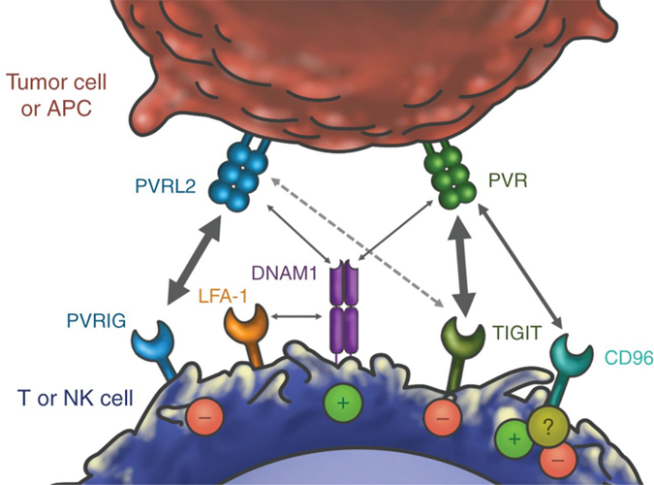
Figure 1. Schematic of the role of PVRIG in the TIGIT/DNAM-1 immune regulatory axis (source: Alteber et al., 2021).
Public information indicates that several anti-PVRIG antibody molecules have entered clinical development. COM701 is one representative candidate molecule. Related studies have focused on its potential use in combination with PD-1 inhibitors and other therapies. Based on available results, PVRIG is more likely to serve as a combination-therapy target than as a stand-alone breakthrough target. Patient selection, biomarker definition, and optimal indication selection remain to be clarified.
II. Task Objectives
Based on known protein sequences, complex structures, and interaction interfaces of PVRIG and its natural ligand PVRL2, Participating Teams should use artificial intelligence (AI) algorithms for model optimization or de novo design. The goal is to obtain high-affinity and highly specific antibody molecules that bind PVRIG and block its interaction with PVRL2. This Track aims to support the translational application of computational biology and antibody engineering in innovative immunotherapy drug discovery.
III. Reference Information
1. Recommended Antibody Databases
Participating Teams may use databases such as the Observed Antibody Space database (OAS), the Patent and Literature Antibody Database (PLAbDab), and the Integrated Nanobody® Database (INDI) for model training or for selecting starting antibodies that can be optimized or modified.
The Observed Antibody Space database (OAS): https://opig.stats.ox.ac.uk/webapps/oas/
The Patent and Literature Antibody Database (PLAbDab): https://opig.stats.ox.ac.uk/webapps/plabdab/
Integrated Nanobody® Database (INDI): https://naturalantibody.com/indi2/
2. Target Protein Information
(1) Protein sequences: Participating Teams may refer to UniProt entries for PVRIG/CD112R (Q6DKI7) and PVRL2/CD112/Nectin-2 (Q92692).
(2) Protein structures: Participating Teams may refer to reported complex structures of PVRIG with its natural ligand PVRL2, including PDB IDs 8X6B and 9E6Y. Homology modeling or other structure-prediction methods may also be used.
8X6B: Crystal structure of immune receptor PVRIG in complex with ligand Nectin-2.
9E6Y: Structure of CD112 (Nectin-2) domain 1 bound to CD112R (PVRIG).
(3) Designated epitope: Candidate antibodies should bind the extracellular domain of PVRIG, target its PVRL2-binding interface, and block PVRIG-PVRL2 interaction.
3. Antibody Submission Instructions
Both IgG monoclonal antibodies and VHH nanobodies are accepted. For IgG antibodies, Participating Teams must provide both VH and VL amino acid sequences. For VHH nanobodies, only the VHH amino acid sequence is required. Each submitted antibody sequence must clearly indicate whether it is generated by de novo design or by optimization/modification. De novo design includes the design of entirely new complementarity-determining regions (CDRs).
For both de novo design and optimization/modification, the sequence similarity between each of the six CDRs of an IgG antibody, or each of the three CDRs of a VHH nanobody, and the corresponding CDRs of any known positive reference antibody should, in principle, be below 80%. Candidate sequences that do not meet this requirement may be excluded from subsequent wet-lab validation at the Organizer's discretion. If a candidate antibody is generated by optimization/modification, information on the starting molecule must also be submitted.
The antibody sequence data quality validation tool, which automatically checks sequence completeness and filters candidate antibodies that are highly similar to known positive references, is available at:
https://github.com/clickmab-bio/ab-data-validator#
4. PVRIG Positive Reference Antibodies
Examples of PVRIG positive reference antibodies are listed below.
Reference Antibody | Format / Source | Sequence Type | Amino Acid Sequence |
Tab5 | IgG antibody; public source | Heavy-chain VH amino acid sequence | EVQLVESGGGVVKPGGSLRLSCAASGFTFGTSSMNWVRQAPGKGLEWVAVISFDGTEIHYADSVKGRFTISRDNSKSTVFLQMNSLRPDDTALYYCAKGSGNIYFYSGMDVWGQGTTVTVSS |
Tab5 | IgG antibody; public source | Light-chain VL amino acid sequence | DIQMTQSPSTLSASVGDRVTITCRAGQSISGWLAWFQQKPGKAPNLLIYETSTLESGVPSRFSGSGSGTEYTLTISSLQPDDFATYYCQQYYSYPLTFGQGTKVEIK |
HR-151 | VHH nanobody; public source | VHH amino acid sequence | HVQLVESGGGSVQAGGSLRLSCVASASGFTYRPYCMAWFRQAPGKEREAVAGIDIFGGTTYADSVKGRFTASRDNAGFSLFLQMNDLKPEDTAMYYCAAGDSPDGRCPPLGQGLNYWGQGTQVTVSS |
IV. Schedule
The Antibody Track includes five stages: Registration Stage, Preliminary Round, Iterative Submission Stage, Semifinal Round, and Final Round.
1. Registration Stage (from the Challenge launch date to 18:00:00 Beijing Time (UTC+8) on July 26, 2026)
Participants may register individually or as a team. In either case, they must create or join a Participating Team. Participating Teams must submit a Proposed Approach Abstract and Round 1 candidate antibody sequences within the stated period. The Organizer will conduct a sequence-level comprehensive evaluation and shortlisting review of Round 1 candidate antibody sequences. Up to 50 teams will enter the Preliminary Round. Based on each team's recommendation priority, the Organizer will, in principle, select up to 10 candidate antibody sequences per team to enter Initial Screening in the Preliminary Round.
Important note: Participating Teams that intend to enter the Antibody Track must complete all required submissions before the Antibody Track registration and submission deadline. The Small-Molecule Track submission portal applies only to the Small-Molecule Track and may not be used to supplement Antibody Track submissions.
Schedule Stage | Step | Time | Submission Requirements |
Registration Stage | Submit Proposed Approach Abstract | From launch to July 26, 2026 | Participating Teams must submit a Proposed Approach Abstract using Attachment_1_Proposed_Approach_Abstract_Template.docx. The abstract will be evaluated based on research foundation, task understanding, feasibility, and innovativeness. The scoring criteria are detailed in Attachment_2_Abstract_Scoring_Criteria.pdf. |
Submit Round 1 Antibody Sequences | Participating Teams must use self-developed AI computational models and submit 50 Round 1 candidate antibody sequences ranked from best to next by predicted results. The submission template is provided in Attachment_6_Antibody_Track_Preliminary_Round_Submission_Template.docx. | ||
Preliminary Round Shortlisting | Based on the candidate antibody sequences submitted by Participating Teams and their recommendation priority, the Organizer will comprehensively evaluate design quality, scientific rationale, and potential for subsequent experimental validation. In principle, up to 10 candidate antibody sequences per team will be selected for Preliminary Round experimental validation. In principle, up to 50 teams and up to 500 candidate antibody sequences in total will enter Initial Screening. |
2. Preliminary Round (early August to late September 2026)
The Preliminary Round includes three steps: Round 1 single-concentration Initial Screening, multi-concentration Bio-Layer Interferometry (BLI) measurement, and competitive enzyme-linked immunosorbent assay (ELISA) testing, and Results Feedback and Advancement. Based on the composite experimental performance of candidate antibody molecules, up to 30 Participating Teams will qualify for iterative submission. The testing procedure and scoring rules for the Antibody Track are detailed in Attachment_7_Antibody_Track_Experimental_Testing_Procedure_and_Scoring_Rules.pdf.
Schedule Stage | Step | Time | Submission Requirements |
Preliminary Round | Initial Screening | Early August to late September 2026 | The Organizer will conduct standardized recombinant expression, purification, and preliminary in vitro binding validation for the candidate antibody sequences selected during shortlisting. For candidate antibody molecules obtained through expression, the Organizer will comprehensively evaluate expression feasibility, sample quality, and preliminary binding ability to PVRIG, and will score and rank the molecules accordingly. The top 200 candidate antibody molecules by score will enter Secondary Screening. |
Secondary Screening | Candidate antibody molecules that pass Initial Screening will undergo higher-precision binding and functional validation, with a focus on their true binding affinity for PVRIG and their ability to block PVRIG-PVRL2 interaction, so as to identify the candidate molecules with the best overall performance. | ||
Results Feedback and Advancement | After Round 1 experiments, the Organizer will evaluate the composite experimental performance of candidate antibody molecules. The best-performing candidate antibody molecule from each team will serve as its representative molecule, and team ranking will be generated based on representative molecule scores. Up to 30 teams will qualify for Round 2 iterative submission. |
3. Iterative Submission Stage (late September to mid-October 2026)
Participating Teams entering the Iterative Submission Stage should use the wet-lab feedback from the Preliminary Round to optimize their model methods, screening strategies, or candidate antibody sequences. They must submit Round 2 candidate antibody sequences and an Iterative Optimization Summary within the stated period. The Organizer will conduct Semifinal shortlisting based on the Iterative Optimization Summary, the design quality and scientific rationale of Round 2 candidate antibody sequences, the team's recommendation order, and the potential for subsequent experimental validation. In principle, up to 30 teams will enter the Semifinal Round. For teams that pass Semifinal shortlisting, the Organizer will, in principle, select up to 10 candidate antibody sequences per team for Semifinal experimental validation based on recommendation priority and comprehensive evaluation results.
Schedule Stage | Step | Time | Submission Requirements |
Iterative Submission Stage | Submit Iteration Summary | Late September to mid-October 2026 | Teams entering the Iterative Submission Stage must submit an Iteration Summary together with Round 2 candidate antibody sequences. The template is provided in Attachment_9_Antibody_Track_Iterative_Submission_Abstract_Template.docx. The summary should explain the main optimizations and modifications made to model methods or candidate antibody sequences based on Preliminary Round results. |
Submit Round 2 Antibody Sequences | Participating Teams must use self-developed AI computational models and submit 50 Round 2 candidate antibody sequences ranked from high to low by predicted score. | ||
Semifinal Shortlisting | Based on Round 2 candidate antibody sequences and the Iteration Summary, the Organizer will evaluate design quality, scientific rationale, and potential for subsequent experimental validation, together with the team’s recommendation order. In principle, up to 10 candidate antibody sequences per team will be selected. Up to 30 teams and up to 300 candidate antibody sequences in total will enter Initial Screening in the Semifinal Round. The scoring criteria for the Iterative Submission Summary are detailed in Attachment_10_Antibody_Track_Iterative_Submission_Abstract_Scoring_Criteria.pdf. |
4. Semifinal Round (mid-October to late November 2026)
The Semifinal Round will follow the same technical workflow as Round 1 for validation and comprehensive evaluation. It includes three steps: Round 2 single-concentration Initial Screening, multi-concentration BLI measurement, and competitive ELISA testing, and Score Confirmation and Final-Round Advancement. Five Participating Teams will be selected to enter the Final Round based on Semifinal results.
Schedule Stage | Step | Time | Submission Requirements |
Semifinal Round | Initial Screening | Mid-October to late November 2026 | The Organizer will conduct standardized recombinant expression, purification, and preliminary in vitro binding validation for the candidate antibody sequences selected during the Iterative Submission Stage. For candidate antibody molecules obtained through expression, the Organizer will comprehensively evaluate expression feasibility, sample quality, and preliminary binding ability to PVRIG, and will select candidate antibody molecules to enter Secondary Screening accordingly. The Organizer will select the top 15 teams and, from those teams, up to 10 candidate antibody molecules per team and up to 150 candidate antibody molecules in total to enter Secondary Screening. |
Secondary Screening | Candidate antibody molecules that pass Initial Screening will undergo higher-precision binding and functional validation, with a focus on their true binding affinity for PVRIG and their ability to block PVRIG-PVRL2 interaction, so as to identify the candidate molecules with the best overall performance. | ||
Results Feedback and Advancement | After Round 2 experiments, the Organizer will combine all candidate antibody molecules that completed Secondary Screening in the Preliminary and Semifinal Rounds. Composite experimental scores will be calculated and compared under the same scoring rules. For each team, the candidate antibody molecule with the highest composite experimental score within the statistical scope will serve as its representative molecule. The representative molecule score will count as the team's wet-lab score. The top 5 teams by wet-lab score will enter the Final Round. Teams ranked 6th to 10th will receive Excellence Awards. | ||
Model and Source Code Submission | Teams entering Semifinal Secondary Screening must submit model files, source code, and documentation sufficient to reproduce the screening results. |
5. Final Round (early December 2026)
Participating Teams advancing to the Final Round will be invited to an on-site defense. The Final-Round Judging Committee will conduct a comprehensive evaluation and scoring. The Organizer will determine the final ranking, as well as the First, Second, and Third Prizes, based on the weighted total of the wet-lab score (70%) and the on-site defense score (30%). Teams that do not advance to the Final Round but rank 6th to 10th by wet-lab score will receive Excellence Awards. Requirements and scoring instructions for the Final-Round defense will be announced on the Challenge Platform before the Final Round. Participants should monitor official Challenge information.
V. Submission
Submission period: from the Challenge launch date to 18:00:00 Beijing Time (UTC+8) on July 26, 2026. Each Participating Team must use a self-developed AI computational model or a model adapted from open-source methods. All submission materials must be submitted through the "Submit Entry" page on the Challenge Platform.
(1) Proposed Approach Abstract: After registration, each Participating Team must submit a Proposed Approach Abstract of no more than one page. The template is provided in Attachment_1_Proposed_Approach_Abstract_Template.docx. The scoring criteria are detailed in
Attachment_2_Abstract_Scoring_Criteria.pdf.
(2) Candidate antibody sequences: Participating Teams must use self-developed AI computational models. Each team must submit 50 candidate antibody sequences ranked from high to low by predicted score. The submission template is provided in
Attachment_6_Antibody_Track_Preliminary_Round_Submission_Template.docx. Experimental Screening Workflow is provided in
Attachment_8_Antibody_Experimental_Screening_Workflow.pdf.
(3) Model files and source code: The Organizer encourages Participating Teams to provide source code, model files, and necessary documentation that can reproduce the candidate antibody sequence screening results. The documentation may include the principles of the model/code and code usage instructions. If a Participating Team enters Secondary Screening in the Semifinal Round, source code submission is mandatory.
(4) Iterative Supplementary Abstract: Teams entering the second round of iteration must submit an Iterative Optimization Supplementary Abstract when submitting Round 2 candidate antibody sequences. The template is provided in
Attachment_9_Antibody_Track_Iterative_Submission_Abstract_Template.docx. The scoring criteria are detailed in
Attachment_10_Antibody_Track_Iterative_Submission_Abstract_Scoring_Criteria.pdf. The abstract should explain the main optimizations and modifications made to model methods or candidate antibody sequences based on Preliminary Round results.
Notes:
1. For antibodies, Participating Teams only need to provide antibody sequences. No physical samples are required. The Organizer is responsible for expression and activity validation of all antibodies. To ensure a unified standard, antibody numbering will use the IMGT numbering scheme. Candidate antibodies should bind the extracellular domain of PVRIG and preferably target its PVRL2-binding interface, with the functional goal of blocking PVRIG-PVRL2 interaction.
2. Open-source data and open-source code may be used as a basis for this task. Clear innovative elements are required. Participating Teams that submit source code must cite the sources of any open-source data, open-source code, or reference models used.
VI. Scoring Criteria
The Antibody Track includes five stages: Registration Stage, Preliminary Round, Iterative Submission Stage, Semifinal Round, and Final Round. The final score of each Participating Team will be calculated as the weighted sum of the wet-lab score (70%) and the Final-Round defense score (30%). The final ranking will be generated based on the final score. The testing procedure and scoring rules for the Antibody Track are detailed in
Attachment_7_Antibody_Track_Experimental_Testing_Procedure_and_Scoring_Rules.pdf. The Final Round scoring form is provided in
Attachment_11_Final_Round_Scoring_Form.pdf.
1. Registration Stage
The Organizer will conduct a comprehensive evaluation of candidate antibody sequences based on the priority order submitted by Participating Teams. Each team may submit up to 50 candidate antibody sequences. In principle, 10 candidate antibody sequences will be selected from each team to enter Initial Screening. The evaluation will focus on the following aspects:
(1) Sequence rationality: whether the candidate antibody sequence conforms to the basic structural characteristics of antibody molecules, and whether it provides a suitable basis for expression, purification, and stability.
(2) CDR similarity assessment: The Organizer will evaluate the amino acid sequence similarity between the complementarity-determining regions (CDRs) of candidate antibody sequences submitted by the same Participating Team and those of positive reference antibodies. Positive reference antibodies include relevant antibodies held by the Organizer, as well as relevant antibodies that are not provided by the Organizer but can be found through public sources. In principle, the CDR similarity eligibility threshold for candidate antibody sequences against positive reference antibodies should be below 80%. The Organizer will also evaluate diversity across all submitted sequences from the same team to avoid a large number of duplicate or near-duplicate designs.
Similarity will be calculated as follows: ANARCI will be used to define CDR regions according to the IMGT antibody numbering scheme; MUSCLE will be used for sequence alignment and Hamming distance calculation; and sequence identity will be calculated as Identity (%) = (1 - Hamming distance / CDR length) × 100%. The antibody sequence data quality validation tool provided by the Organizer is available at:
https://github.com/clickmab-bio/ab-data-validator#
(3) Overall design quality and verifiability: The Organizer will evaluate the innovativeness, developability, and potential risk factors of the candidate antibody sequences, such as high-risk post-translational modification sites.
2. Preliminary Round Scoring
The scoring rules for the Preliminary Round are as follows:
(1) Initial Screening: The Organizer will conduct recombinant expression and purification for shortlisted candidate antibody sequences, and then perform single-concentration Bio-Layer Interferometry (BLI) testing on the expressed candidate antibody molecules. Composite scoring and ranking will be based on BLI binding results, expression yield, and purity. Composite score = BLI score × 0.7 + expression yield score × 0.2 + purity score × 0.1. For BLI results, binding, weak binding, and no binding will receive 100, 50, and 0 points, respectively. BLI testing will use an antigen concentration no higher than 500 nM. The response shift (nm) will be used as the criterion: response shift ≥ 0.1 nm indicates binding; 0 ≤ response shift < 0.1 nm indicates weak binding; and response shift < 0 nm indicates no binding. For expression yield, >100 mg/L, 25-100 mg/L, and <25 mg/L will receive 100, 60, and 0 points, respectively. For purity, ≥90%, 80%-90%, and <80% will receive 100, 80, and 60 points, respectively. In principle, candidate antibody molecules will be ranked by composite score. If multiple candidate antibody molecules from the same team enter Secondary Screening, subsequent team ranking will in principle use the score of that team's best-performing representative molecule.
(2) Secondary Screening: The Organizer will conduct multi-concentration BLI affinity measurement and competitive ELISA testing for candidate antibody molecules that pass Initial Screening. Composite scoring will be based on the dissociation constant (Kd) value and the half-maximal inhibitory concentration (IC50) value. Both Kd and IC50 will be ranked from low to high. Rank 1 will receive 100 points, and each subsequent rank will receive 2 points fewer. If no valid result is obtained for an item, that item will receive 0 points. Secondary Screening composite score = Kd ranking score × 0.5 + IC50 ranking score × 0.5. After the Preliminary Round, the top 30 teams will qualify for Round 2 submission and enter the Iterative Submission Stage. After Round 2 shortlisting, selected teams will enter the Semifinal Round.
3. Semifinal Round Scoring
The Semifinal Round scoring rules are the same as those for the Preliminary Round. Advancing teams will submit 50 Round 2 candidate antibody sequences. In principle, up to 10 candidate antibody sequences per team will be selected for Semifinal wet-lab validation. After the Semifinal Round, the Organizer will consider all candidate antibody molecules that have completed experimental evaluation in the Preliminary and Semifinal Rounds. For each team, the candidate antibody molecule with the highest experimental score will be used as its representative molecule. Team wet-lab score rankings will then be generated. The top 5 teams will enter the Final Round, and teams ranked 6th to 10th will receive Excellence Awards.
4. Final Round Scoring
The five Participating Teams advancing to the Final Round will be invited to an on-site defense. The Final-Round Judging Committee will score the defense. Final score = wet-lab score × 70% + on-site defense score × 30%. For teams advancing to the Final Round, all scores of candidate antibody molecules that have completed experimental evaluation in the Preliminary and Semifinal Rounds will be compared. The highest experimental score among those candidate antibody molecules will be included in the wet-lab score. The defense will be evaluated based on the technical route, model methods, result analysis, innovativeness, and interpretability. Requirements and scoring instructions for the Final-Round defense will be announced on the Challenge Platform before the Final Round. Participants should monitor official Challenge information.


Create a team
Join the Team
| Team ID | Team Name | Track | Team Leader | Action | ||
|---|---|---|---|---|---|---|
| ${ v.id } | ${ v.name } | ${ v.racetrack } | ${ v.nickname } | ${ v.member_num } | Apply to join Fully staffed | Apply to join |

The application to join the team has been submitted and is waiting for the team leader's review
My team
Team member list(Limited to 5 peoples)
| Name | Phone Number | Role |
|---|---|---|
| ${ v.nickname } | ${ v.tel } | ${ v.is_leader ? 'Team Leader' : 'Team Member' } |
Team member application list
| Name | Phone Number | School | Major | Qualification | Action |
|---|---|---|---|---|---|
| ${ v.nickname } | ${ v.tel } | ${ v.school } | ${ v.major } | ${ v.qualification } |
*Upload submissions of the first round
*Upload submissions of the second round
*Upload submissions
Source code model
${ worksType === '抗体' ? 'Antibody' : 'Small-Molecule' } Track

${ v.title }

${ worksType === '抗体' ? 'Antibody' : 'Small-Molecule' } Track
${ v.title }
${ worksType === '抗体' ? 'Antibody' : 'Small-Molecule' } Track
${ worksType === '抗体' ? 'Antibody' : 'Small-Molecule' } Track


Scan the code to add WeChat assistant

Organizing Committee of BioShanghai Week
Shanghai Pharmaceuticals Holding Co., Ltd.
Shanghai State‑owned Capital Investment Co., Ltd.
Shanghai United Imaging Healthcare Co., Ltd.
Shanghai Zhangjiang Pharma Valley Ecosystem Technology Development Co., Ltd.
Shanghai Yicai Wanxiang Information Technology Co., Ltd.
